
Know your plugs
Europe's standard fast-charging connector is CCS2 (Combined Charging System), and most AC charging uses Type 2. Almost all EVs sold in Europe use these, so adapters are rarely needed. Carry a Type 2 cable for slower public chargers and hotels.
Main charging networks
- Ionity: A high-power network along major motorways across Europe.
- Fastned: Fast chargers with contactless card payment, especially in the Netherlands, Germany, UK and Belgium.
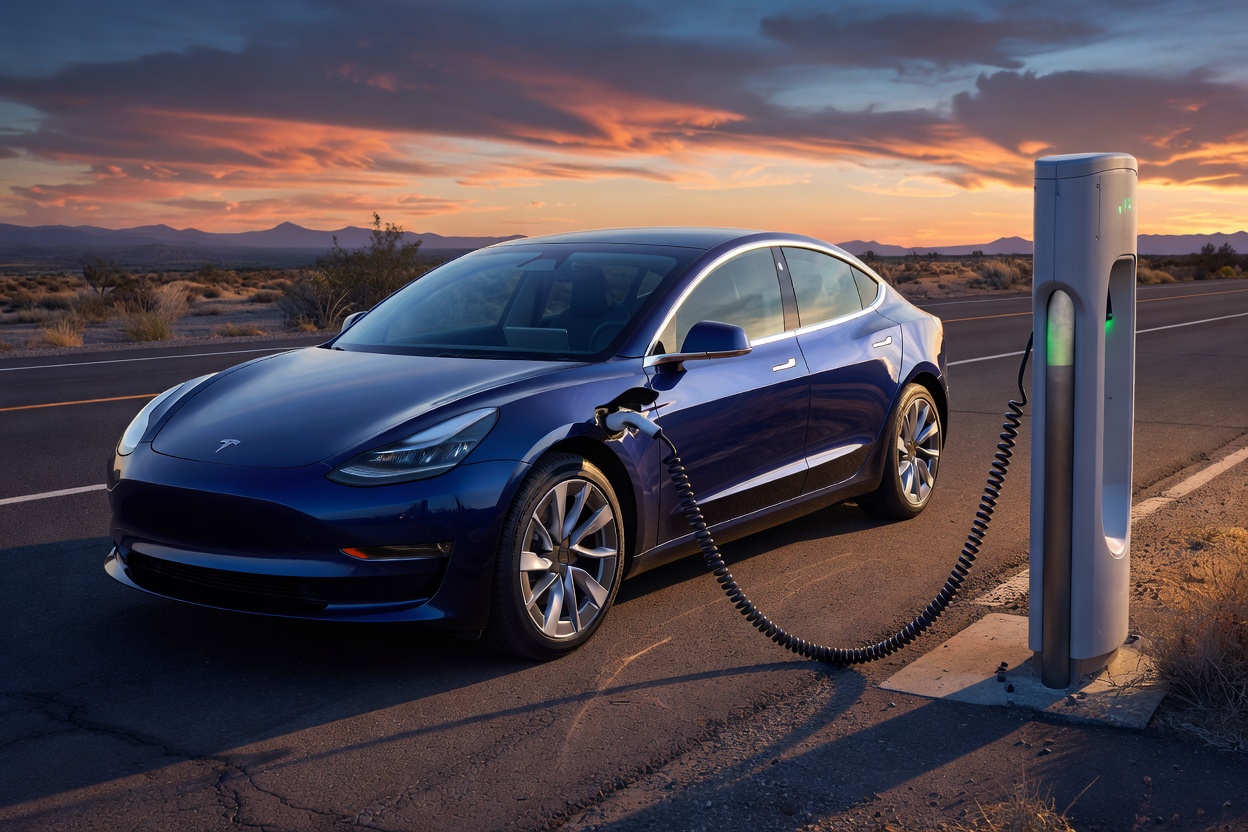
- Tesla Supercharger: In many European countries, selected Superchargers are open to non-Tesla EVs via the Tesla app.
- Local operators: Examples include Allego, Electra, Shell Recharge, Be Charge and ChargePlace Scotland. Coverage varies by country.
Apps and payment
Use a route planner such as A Better Routeplanner (ABRP), which models your car's consumption, slope, speed and temperature. PlugShare and ChargeMap show real-time reports, availability and user comments. Most EV drivers keep two or three network apps or RFID cards, plus a roaming card that works across operators. The EU's AFIR regulation is rolling out requirements for ad-hoc payment by bank card at new public fast chargers and for fast-charging stations at regular intervals along the main TEN-T road network, so card payment is increasingly common.
Plan realistic range
- Charge 10–80%. Charging speed slows beyond about 80%, so short, frequent stops are faster than waiting for 100%.
- Plan for motorway speed. Driving at 130 km/h uses much more energy than at 100 km/h.
- Allow for mountains and cold. Climbs, headwinds and low temperatures can reduce real-world range noticeably, sometimes by 20–30% in winter. Descents regenerate some energy.
- Keep a buffer. Arrive at chargers with at least 10% battery in case of a fault or queue.
- Pre-condition the battery. If your car supports it, set the navigation to a fast charger so the battery warms up before arrival.
Country snapshots
Norway: Excellent infrastructure and a very high share of EVs. See our Atlantic Road & Fjord Route. Scotland: The Highlands are improving, but remote sections need planning for the North Coast 500. Italy: Motorways are well served, but coastal and mountain areas have fewer high-power chargers. Switzerland: Reliable network, expensive rates.
Hotel and overnight charging
Filter accommodation by "EV charging" on booking platforms and ask about the type and cost. Overnight AC charging can add a lot of range while you sleep, saving time the next day.
Rule of thumb: Plan each leg so you arrive at a fast charger with 10–20% battery, and always know the next alternative charger.