
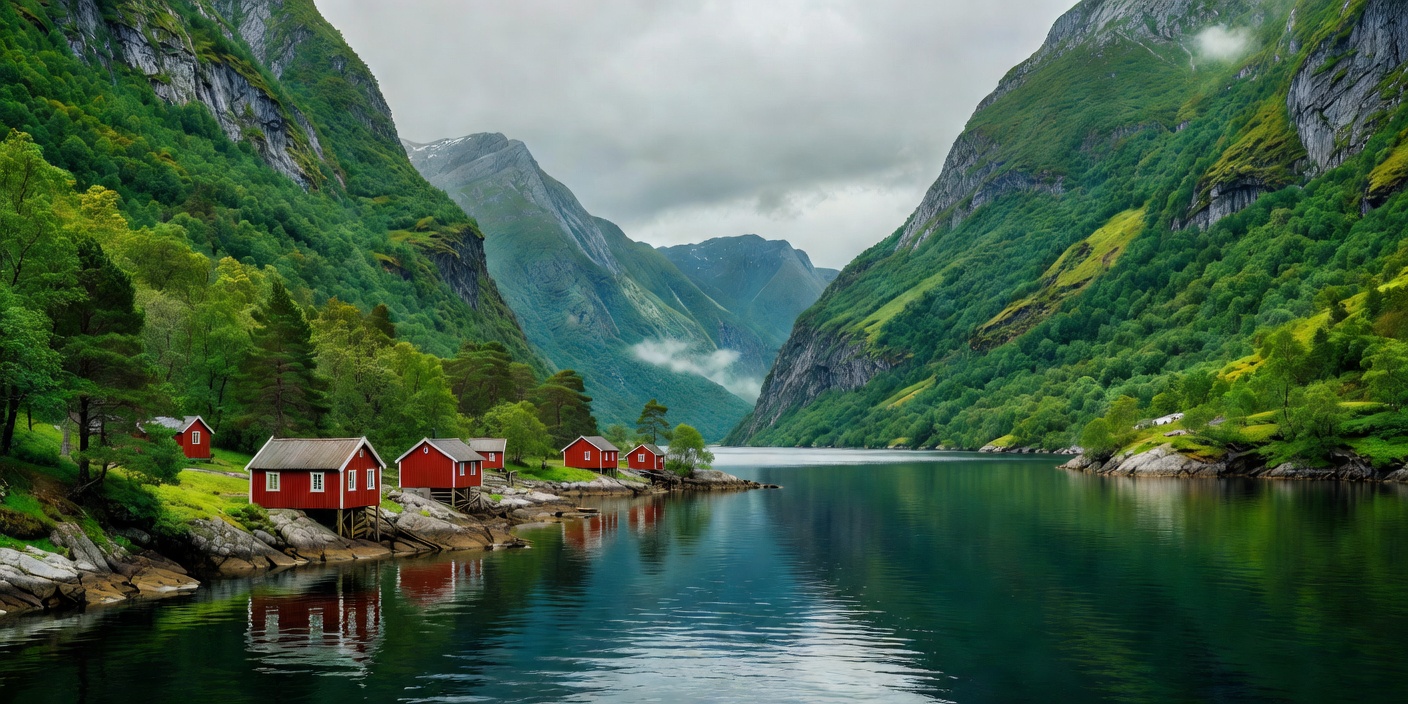
A route built for scenery
This itinerary links three of Norway's best-known sights in Møre og Romsdal. The Atlantic Road (Atlanterhavsvegen) is an 8.3 km stretch between Eide and Averøy that opened in 1989 and crosses eight bridges, including the curving Storseisundet Bridge. It is part of Norway's National Tourist Routes programme. From there you drive inland to Åndalsnes for Trollstigen and onward to Geiranger.
Itinerary
Day 1: Kristiansund and the Atlantic Road
Start in Kristiansund and drive the Atlantic Road in calm weather for the best views, or in a storm if you want drama. Park at the viewpoints and walk the pedestrian paths, including the fishing platform at Hulvågen.
Day 2: Molde and Åndalsnes
Head south via Molde, whose "Panorama of 222 peaks" can be seen from Varden viewpoint, and continue to Åndalsnes at the head of the Romsdalsfjord. Allow time for the Rampestreken viewpoint or the Romsdal Valley's Trollveggen, Europe's tallest vertical rock wall.
Day 3: Trollstigen to Geiranger
Trollstigen climbs from Åndalsnes via eleven hairpin bends and passes the Stigfossen waterfall. The Trollstigen visitor centre has a viewing platform and a café. Continue over the Gudbrandsjuvet gorge to Valldal, where strawberries are sold in July. Take the Eidsdal–Linge ferry, then drive the Eagle Road (Ørnevegen), which has eleven hairpins descending into Geiranger.
Day 4: Geirangerfjord
The Geirangerfjord is part of the UNESCO-listed West Norwegian Fjords. Visit Flydalsjuvet viewpoint, then drive the toll road to Dalsnibba (around 1,500 m) for a bird's-eye view. Consider a fjord cruise to see the Seven Sisters waterfalls.
Practical driving advice
- Check seasonal closures. Trollstigen and the road to Dalsnibba close in winter. Opening depends on snow and is usually from late May or June. Check live information on the Norwegian Public Roads Administration website.
- Expect tolls and ferries. Most tolls are automatic via AutoPASS, and rental cars usually have a tag. Ask your rental company how charges are billed.
- Follow Norwegian rules. Use dipped headlights at all times, respect low speed limits (generally 80 km/h or less on rural roads) and watch for speed cameras.
- Mind the size. Trollstigen is not suitable for vehicles over 12.4 m. Tight hairpins make motorhomes slow work.
- Charge easily. Norway has one of Europe's densest EV charging networks, making this a good route for electric cars.
Pros and cons
Pros
- Three iconic sights within a compact region
- Superb road quality and viewpoints
- Excellent EV infrastructure
Cons
- Short summer season for the mountain roads
- Higher prices for food and lodging
- Cruise crowds in Geiranger during peak weeks
Photography tip: Summer days are very long in Norway. Visit the viewpoints in the evening for softer light and fewer visitors.