
Why drive the Amalfi Coast
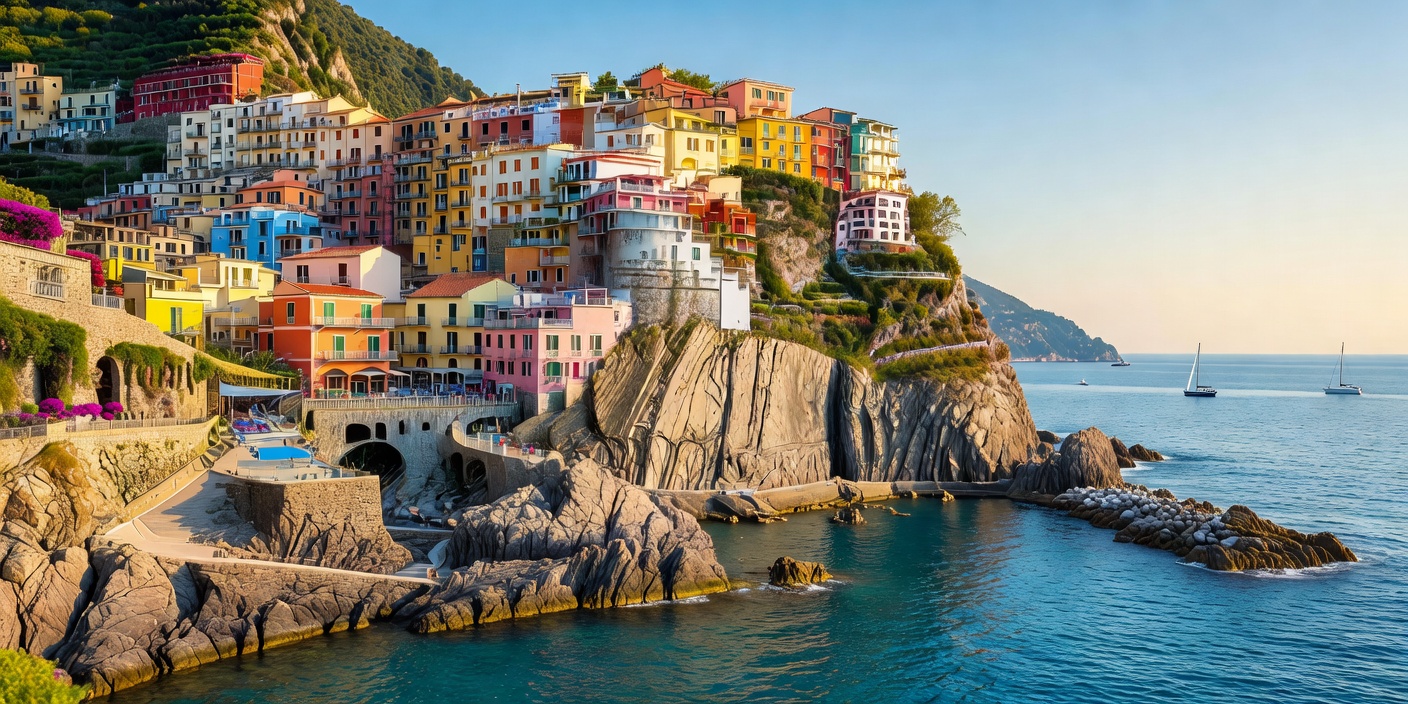
The SS163 clings to the Sorrentine Peninsula's southern flank, passing lemon terraces, watchtowers and villages painted in ochre, pink and white. The Amalfi Coast is a UNESCO World Heritage cultural landscape. The road itself, carved into limestone cliffs, is part of the draw. Expect constant curves, a drop to the sea on one side and buses that need the whole lane on the other.
Route and key stops
1. Sorrento to Positano (about 17 km)
Leave Sorrento early and climb over the ridge at Colli di San Pietro. Stop at the Nastro Azzurro viewpoints before dropping into Positano. Park in a garage at the top or bottom of town and walk the stepped lanes, because central streets are not designed for visitors' cars.
2. Positano to Amalfi (about 16 km)
Continue through Praiano, where the road pinches around the Marina di Praia cove. Furore's Fjord is a short pull-off for a view of a deep gorge cut into the cliff. Amalfi's cathedral and its Piazza Duomo are the logical lunch stop.
3. Ravello detour (about 6 km uphill from Amalfi)
Turn inland at Atrani for the narrow climb to Ravello. Villa Rufolo and Villa Cimbrone's Terrace of Infinity reward the effort, and temperatures are a few degrees cooler on summer afternoons.
4. Amalfi to Salerno (about 25 km)
The road widens a little beyond Maiori and Minori. Finish in Vietri sul Mare, known for ceramics, or continue to Salerno for the seafront and easier parking. From here the A3 motorway returns you towards Naples and Pompeii.
Driving tips
- Start early. Before 9:00 the road is calmer and parking is easier. After 11:00 in summer, traffic can slow to a crawl.
- Check local traffic rules. In peak season, local authorities have introduced temporary restrictions on the SS163, including alternate-day access by licence plate on some dates. Check current notices before you travel.
- Beware of ZTL zones. Many centres are restricted traffic zones monitored by cameras. Entering without a permit can result in a fine, even in a rental car.
- Use the horn on blind bends. A short tap before a blind corner is normal practice here. Give way to buses and keep your mirrors folded where space is tight.
- Choose a small car. A compact vehicle is far less stressful than an SUV. Manual cars are standard, so reserve an automatic early if you need one.
- Consider the passenger-side seat. The best views are on the sea side, so share the driving or stop often rather than gawking while moving.
Where to park and stay
Positano and Amalfi have paid garages and street parking that fill fast in summer. Many hotels offer parking, sometimes for a fee, so confirm when booking. Staying in Praiano, Maiori or Minori usually costs less than Positano and offers calmer evenings. Salerno or Sorrento work well as bases if you prefer to leave the car and use ferries for day trips.
Pros and cons
Pros
- Unmatched coastal scenery in a short distance
- Easy to combine with Pompeii, Capri and Paestum
- Excellent food and lemon-based specialities
Cons
- Heavy summer traffic and limited parking
- Very narrow roads with large buses
- Some days a ferry is faster than driving
Insider tip: Ferries run between Amalfi, Positano and Salerno in the season. Drive one direction, return by sea and enjoy the coast from the water.